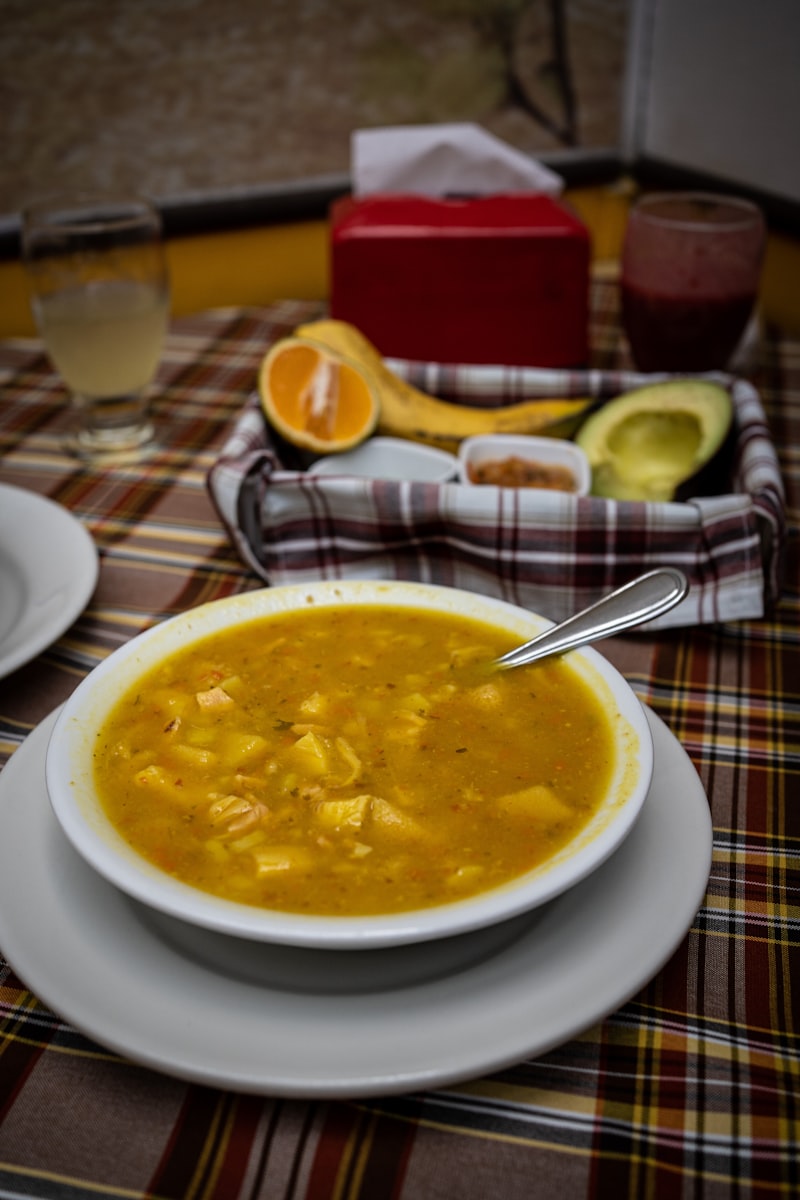
There are afternoons in Bogotá when a thick jacket isn't enough to shake off the cold. It's a gray, mischievous cold that creeps through the seams and raises goosebumps as you walk the steep, cobblestoned streets lined with colonial facades. In those moments, your body doesn't ask for heating, it begs for shelter. And that shelter always comes in the shape of a deep bowl, thick and golden, steaming with an aroma so particular you could recognize it with your eyes closed.
I'm talking about ajiaco santafereño, Bogotá's signature chicken and potato soup. Those of us who grew up here know that sitting down in front of a cured clay bowl, watching the steam fog up your glasses, and taking that first creamy spoonful is the closest thing to coming home, no matter where you are.
But what makes this gem of Andean cooking so addictive and unique? It's not just hunger. It's the magic of its history and the precision of its ingredients.
The trio of potatoes: the architecture of flavor
Ask any Bogotá grandmother what the secret to a good ajiaco is, and she'll give you a knowing look before telling you it all comes down to picking the right potatoes. Colombia is blessed with an incredible variety of tubers, and this dish needs three specific types, each playing a completely different role in the pot.
Papa criolla
The favorite child. Small, round, and intensely yellow. Its job is to fall apart completely during cooking, giving the broth its signature golden color and a thick, almost velvety texture.
Papa pastusa
The one that brings smoothness. It breaks down halfway, helping thicken the broth and giving it that perfect consistency, not quite a purée, but far from watery.
Papa sabanera
The warrior of the group. Firmer, with purplish skin. It's cut into thick slices or chunks and holds up through the cooking, so every spoonful gives you whole pieces to bite into.
Making ajiaco without this trinity is, simply put, cooking a different soup. Each one goes into the pot at a different moment, a dance of timing that only patience and plenty of love can master.
Guascas: the green soul of the mountain
You could have the best potatoes from the Cundiboyacá highlands, the most tender chicken, and the sweetest corn, but if you're missing guascas, you're not making ajiaco. It's that simple.
This wild herb, which many outside the Andes mistake for a weed, is what gives the dish its absolute identity. It has a slightly herbal, wild flavor and an aroma that evokes wet earth after the rain. It's added almost at the very end of cooking so its essential oils don't get lost in the boil. It's the master touch, the smell that fills Bogotá homes every Sunday around noon.
The ritual at the table: to each their own
Ajiaco isn't served fully finished; it's assembled at the table, turning into an almost sacred ritual. Small bowls with the required sides are placed in the center.
First, the shredded chicken and tender corn on the cob, which already come inside the broth. Then the diner takes control. Are you the type to drown the broth in a generous spoonful of thick heavy cream for a smooth, dairy touch? Or do you prefer the bright acidity of capers submerged in the hot liquid?
And of course, on the side, on a separate plate, waits avocado at its exact point of ripeness (the kind that feels like butter) and a portion of perfect white rice, fluffy and shiny. Some prefer to eat the rice separately; others, more boldly, spoon it straight into the soup. There are no judgable rules here, only pure enjoyment.
Where to try the most authentic one in Bogotá?
If you're passing through the capital and want the real experience, stay away from the big chains. Walk through La Candelaria neighborhood, climb its steep streets, and look for traditional restaurants near Plaza de Bolívar or el Chorro de Quevedo. Places with high ceilings, wooden beams, and checkered tablecloths, where ajiaco is served boiling hot in black clay pots from La Chamba.
There, surrounded by the murmur of people and the sound of rain hitting the clay roof tiles, you'll understand why this dish is Bogotá's true pride.
What about you? How do you like to enjoy it? Are you on team capers, or do you prefer it plain so you can taste the pure flavor of the guascas?