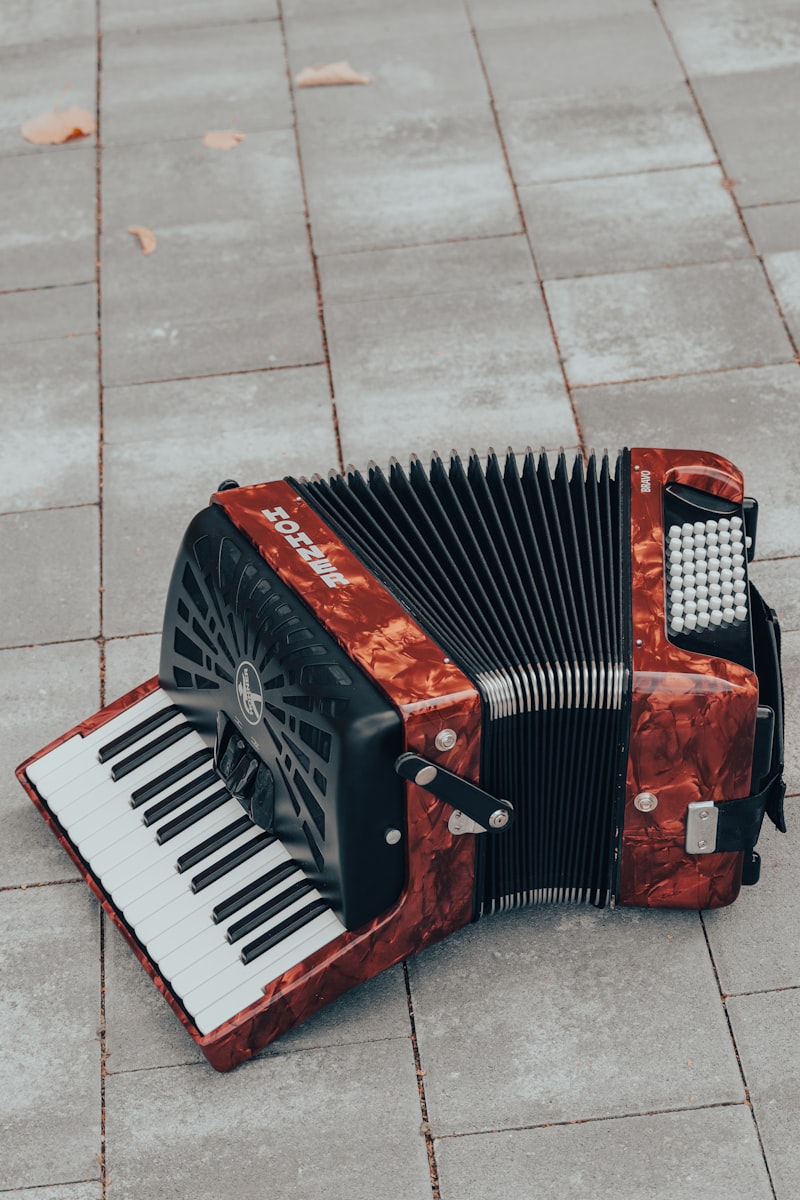
If anything defines the Colombian spirit, it's that we cannot resist the sound of a well-played accordion. It doesn't matter if you were born in chilly Bogotá, in the mountains of Medellín, or facing the sea in Santa Marta; when a vallenato starts playing, the chest swells and the foot starts keeping the beat almost involuntarily.
But for anyone approaching this genre for the first time, the experience can be an emotional collision. How can music about deep heartbreak be danced to with such joy? Why do people know five-minute-plus songs by heart?
To understand vallenato you don't need to be a music expert — just tune your ear and open your heart. Pour yourself a coffee (or a rum, if it's late enough) and get comfortable, because we're about to decode together the rhythm that pulls the strings of the Caribbean.
The three elements of a perfect parranda
Vallenato was born in the rural areas of the old Magdalena Grande, the fruit of three completely different worlds colliding. It is, quite literally, the reflection of our cultural mix. For a vallenato to be authentic, it needs an instrumental trinity that represents our history:
The accordion
It arrived from Europe in the 19th century — they say through the port of Riohacha, or smuggled up the Magdalena River. It stayed forever and became the lead voice of the story.
The caja
A small drum of African origin held between the knees. It's the heart of the rhythm — the one that decides whether a song is for crying or for tearing up the dance floor.
The guacharaca
An Indigenous instrument traditionally made of caña brava reed. It adds that signature scraped shimmer that ties the whole melody together.
When these three compadres get together on a street corner or in a backyard under the shade of a mango tree, what we call a "parranda" breaks out. Forget big stages and neon lights; real vallenato is lived in the intimacy of a group of friends gathered to listen to sung stories.
The four airs: a map so you don't get lost
One of the first surprises for beginners is discovering that vallenato isn't one uniform rhythm. It's traditionally divided into "four airs," each with its own personality and speed. Learning to tell them apart is your true entry pass into the connoisseurs' club.
The fast party starter: the puya
The fastest, most demanding air of them all. Musicians fire off accordion runs at incredible speed and the lyrics tend to be playful or competitive. Pure explosive energy. If your heart races and your feet want to fly, you're listening to a puya.
The traveler's beat: the merengue
Careful — it has nothing to do with Dominican merengue. Vallenato merengue is cheerful, danceable, with a deliciously bouncy rhythm. It was traditionally used to tell the adventures of travelers and small-town festivities.
The town chronicler: the paseo
The most popular air, and the one you've probably heard on the radio. Its tempo is moderate, ideal for slow dancing, but its real power is in the lyrics. The paseo is a sung chronicle: it can narrate anything from a declaration of love to the story of a farmer who lost his land.
The soul's lament: the son
The slowest, most melancholic rhythm. You recognize it immediately because the accordion's bass notes take on an enormous, heavy presence, almost like a wail. The son is for listening with a drink in hand, eyes closed, feeling the pain of a composer abandoned by his muse.
From the juglares to the "Nueva Ola"
Vallenato has changed enormously over the years, and it's normal to get lost between the classics and what plays in clubs today.
In the beginning there were the "juglares" — troubadours like Alejandro Durán or Emiliano Zuleta who went from town to town carrying messages and news with an accordion on their back. They were the journalists of their time. They planted the roots and composed eternal anthems like "La gota fría."
Then came the golden age of the great bands: the years of Rafael Orozco with Binomio de Oro, of Diomedes Díaz (the "Cacique de la Junta"), and of Jorge Oñate. They professionalized the genre, filled stadiums, and sang to love with heartrending poetry.
Today, new generations have blended the accordion with electric guitars, synthesizers, and urban rhythms in a movement known as the "Nueva Ola" (New Wave, led by Silvestre Dangond) that keeps evolving with contemporary artists. The purists sometimes complain, but the essence remains alive: the desire to tell a good story.
Three songs to graduate as a local
If you want to build your first playlist to understand this universe, start with these three pillars every Colombian knows inside out:
"La gota fría" (Carlos Vives's or Emiliano Zuleta's version)
The perfect example of the vallenato "piquería" — a duel of verses and pride between two accordion players challenging each other to prove who was best.
"Sin medir distancias" (Diomedes Díaz)
A vallenato ballad in paseo form that defines coastal romance and nostalgia. That accordion intro gives you goosebumps instantly.
"La casa en el aire" (Rafael Escalona)
A stroke of poetic genius in which a jealous father decides to build his daughter a house in the clouds so no suitor can ever reach her.
In the end, vallenato is a conversation. It's not about how many technical facts you memorize, but about your ability to surrender to the tale of an accordion that laughs and cries at the same time. It's the soundtrack of the Caribbean towns — the warmth of their people translated into music.
Which vallenato gives you goosebumps from the accordion's very first notes? Have you lived your first parranda yet, or is it still on your list?