At 7:34 in the morning, the earth roared from its depths. A dry, long, and deep tremor shook everything from Chocó to the mountains of the Coffee Region. In Cali, Buenaventura, Pereira, and Manizales, walls creaked. In Bogotá, on the upper floors, lamps swung wildly. Those of us who were there felt time freeze in an endless blink. Fear lodged itself in our chests and panic threatened to take over the streets.
But just as the dust began to settle and the initial shock gave way to reality, the scene ahead broke our hearts: houses reduced to rubble, entire families with no roof to spend the night under, and, tragically, the lives of fellow Colombians extinguished in seconds. The pain was thick, the kind that sits in your throat and won't let you swallow. Panic turned into pure anguish at the sound of cries for help trapped under concrete and the anguished voices of people searching for a family member among the bricks. And yet, fewer than five minutes had passed before people were already out on the street — not just assessing the damage or moving blocks by hand to rescue neighbors and pets, but shouting across to the sidewalk next door: "Neighbor! Are you okay? Did anything happen to you?"
No risk-management course teaches that instant reaction. Kindness in Colombia isn't a decoration for tourism brochures or a fake smile for the photo. It's a living force, a chip wired into our blood that kicks in exactly when things get hard.
Pain fought off with solidarity and hot coffee
In the hours after the earthquake, stories multiplied on every corner of the Valle del Cauca, Risaralda, Chocó, and Quindío. In the hardest-hit neighborhoods, there was no room for selfishness.
In Armenia, for instance, a woman who sells arepas on the corner dragged her "anafre" (a small charcoal stove) out to the sidewalk. She lit the coals and started handing out strong "tinto" (black coffee) and boiling "agua de panela" (a hot drink made from unrefined cane sugar) to neighbors still shaking with nerves. When a young man tried to pay her, she frowned: "What are you thinking, mijo? Today we're all in the same boat."
That's how empathy works in this corner of the world. You don't think about it; you just act. With no one decreeing it, community soup pots appeared. Young people from the block banded together to clear rubble, help search for people and pets, or clear a neighbor's garage. Missing blankets or mattresses? A traditional "vaca" (a pooled-money collection) came together among those who had something to give. A bowl of hot soup and a "we're here" are worth more than a thousand speeches.
The art of taking people in when the world shakes
If there's one thing that disarms anyone visiting this country, it's how we look after those who come from elsewhere. During the quake, thousands of travelers were out walking Salento, strolling through downtown Cali, or having coffee in Filandia. For someone who has never felt the ground crack beneath their feet, an earthquake is an unfamiliar kind of panic.
In Filandia's main square, a group of French tourists was left disoriented amid the noise of alarms and the commotion. They didn't understand the language, didn't know which way to run. A local family, who had just evacuated their own house, saw them frozen in place. They gathered around them, hugged them, and gently walked them toward the park's green area. With gestures, smiles, and slow Spanish, they made them understand the danger had passed. They shared coffee from the thermos they were carrying.
Those travelers stopped being tourists and became frightened people far from home. And to us, a visitor will never be a stranger; they're a guest whose life gets protected.
More than smiling: the beautiful stubbornness of moving forward
Many people abroad wonder where we get the strength to crack jokes or smile so quickly after a scare like that. This isn't about romanticizing the tragedy or downplaying the losses. It's pure emotional survival. It's the determination to embrace life so adversity doesn't win.
- The conversation that heals: Colombians need to tell the story. Talk about what they felt, exaggerate the anecdote a little, and find a laugh in the scare to take away some of its weight.
- The sense of community: no grief is carried alone. Knowing the neighbor will be there to lend a hand is what lets us walk with some peace of mind amid so much uncertainty.
- The tireless push forward: if a wall came down, the next day the bricks get cleared away and plans are made to rebuild it stronger.
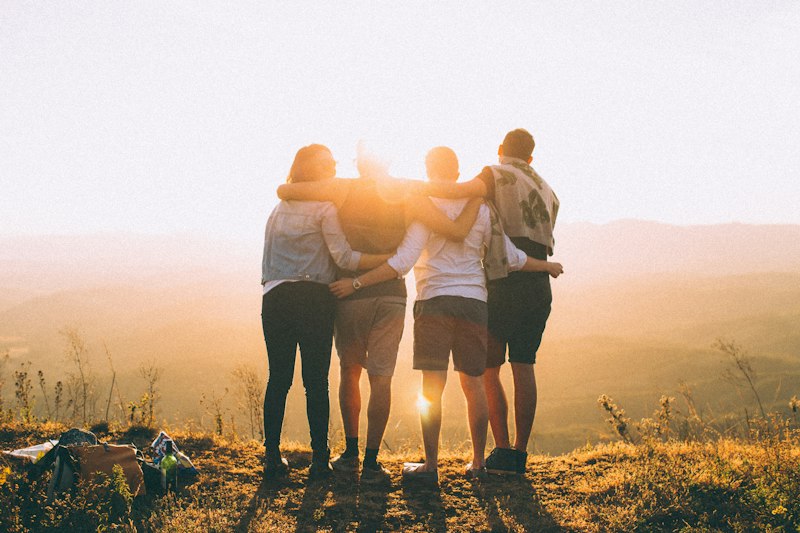
That capacity to find comfort in a hug, in a conversation on the sidewalk, or in a shared plate of food is the true engine of Colombian culture.
A warmth that withstands anything
The tremor left cracks in the walls, and cracks in the soul, that will take days or weeks to repair. But it also left us with a plain, hard truth: Colombia's sturdiest structure isn't made of concrete, brick, or steel. It's made of the human quality of its people.
The days will pass, buildings will be put back together, and the fear of the earthquake will end up stored away in the trunk of memory. What never gets erased is the mark of that hand reaching out on the sidewalk, the "come over here, there's room for one more," and that unshakeable certainty that, no matter how hard the earth shakes, in this corner of the planet, no one walks alone.